
Article 2 of 2 in Disability advocacy
By Dr. Gifty Nana Yaa Rockson
Lecturer – University of Education, Winneba (UEW); Special Education Department. Trainer, Africa Dyslexia Organisation
Introduction
Imagine this…
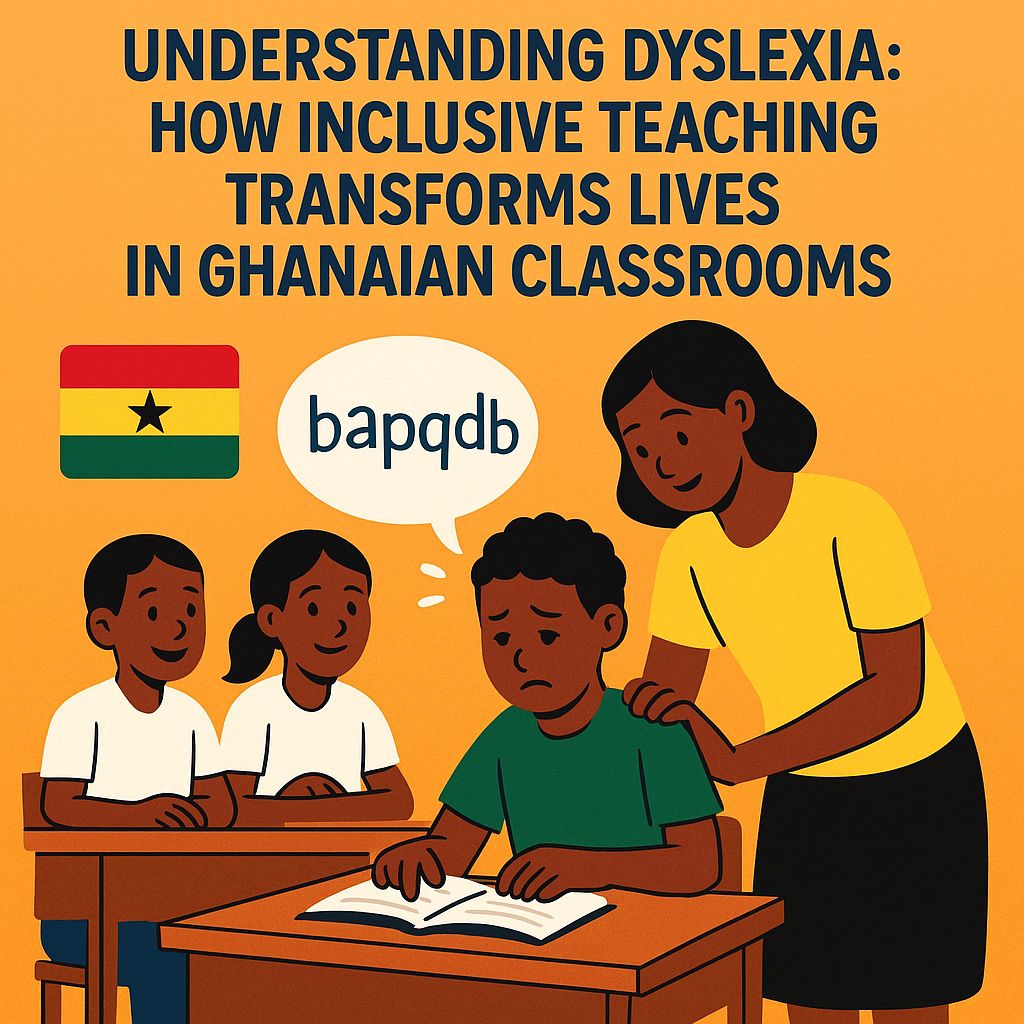
A bright 10-year-old boy sits quietly in class. He loves science, asks deep questions, and can explain the solar system better than most adults. But when asked to read aloud, his voice trembles. The words seem to dance on the page. His classmates giggle. The teacher sighs.
Tomorrow, he might pretend to be sick, just to avoid reading again.
That child isn’t lazy. He isn’t slow. He’s likely dyslexic and misunderstood.
What Is Dyslexia Really About?
Dyslexia is not a measure of intelligence. It is a language-based learning difficulty that affects how the brain processes written and spoken words. Learners with dyslexia struggle with reading, spelling, and writing yet they often excel in creativity, problem-solving, storytelling, and visual thinking.
In many Ghanaian classrooms, such learners are still labeled as “lazy,” “forgetful,” or “unserious.” In reality, they process information differently and need targeted support, not punishment or exclusion.
Why Awareness Matters
Globally, an estimated 1 in 10 people—about 10% of the population—experience dyslexia (British Dyslexia Association, 2024; International Dyslexia Association, 2023). In practical terms, this means that in almost every classroom in Ghana, at least one learner may have an undiagnosed reading difficulty.
Without awareness and timely intervention, these learners often face:
- Low self-esteem
- Poor academic performance
- Frustration and withdrawal
- Risk of dropping out
But when awareness meets empathy, everything changes. When teachers understand the signs and apply inclusive strategies, learners with dyslexia begin to thrive.
I’ve seen it happen. A child once mocked for “reading slowly” later became the best storyteller in class after his teacher introduced paired reading and colored overlays to make the text easier to process.
Creating Inclusive Classrooms
Inclusion is not about teaching more; it is about teaching differently and being empathetic. Here are practical, classroom-ready strategies every teacher can use:
- Teach with the Senses: Combine sight, sound, and touch; let learners see, say, and do.
- Use High-Interest, Low-Reading-Level Texts: Keep motivation high while building reading confidence.
- Scaffold Tasks: Provide structured writing frames, graphic organizers, and models.
- Encourage Peer Support: Pair struggling readers with understanding peers.
- Celebrate Every Effort: Progress, not perfection, is the goal.
When teaching becomes inclusive, all learners benefit—not only those with dyslexia.
Assistive Technology: Leveling the Playing Field
Technology is a great equalizer. Assistive Technology (AT) enables learners with dyslexia to access learning independently. Some proven tools include:
- Microsoft Immersive Reader: Reads text aloud while highlighting each word, adjusts line spacing, and breaks words into syllables.
- Read&Write: Provides text-to-speech, word prediction, and picture dictionaries.
- OrbitNote: Allows learners to listen to and annotate PDFs.
- Scanning Pens: Read printed text aloud, boosting independence during exams.
In a Junior High School in Accra, one boy who always failed comprehension passed for the first time after being introduced to a scanning pen. He said softly, “Now I can read without feeling stupid.” That’s the power of understanding and access.
Teachers: The True Changemakers
Teachers hold the key to transformation. With empathy, creativity, and the right tools, you can change the trajectory of a learner’s life.
As we embrace AI and digital transformation, let’s remember:
Teachers cannot be coded. Technology can assist, but only human compassion can transform.
When teachers blend innovation with care, they don’t just teach—they heal, empower, and inspire.
A Call to Action
Let’s build schools where no child is labelled “slow” simply because they process language differently. Let’s equip teachers to identify and support learners with reading difficulties. Let’s ensure parents, policymakers, and communities understand that dyslexia is not a disability of intelligence; it’s a learning difficulty that needs understanding, empathy and support.
- If you’re a teacher: Start by observing and adapting.
- If you’re a parent: Start by listening.
- If you’re a policymaker: Start by investing in teacher training and assistive tools.
Final Thought
“When we teach differently, children learn differently and that’s how we change the world.”
References
British Dyslexia Association. (2024). What is dyslexia? https://www.bdadyslexia.org.uk
International Dyslexia Association. (2023). Definition of dyslexia. https://dyslexiaida.org