
Article 1 of 5 in Accessibility and Inclusion
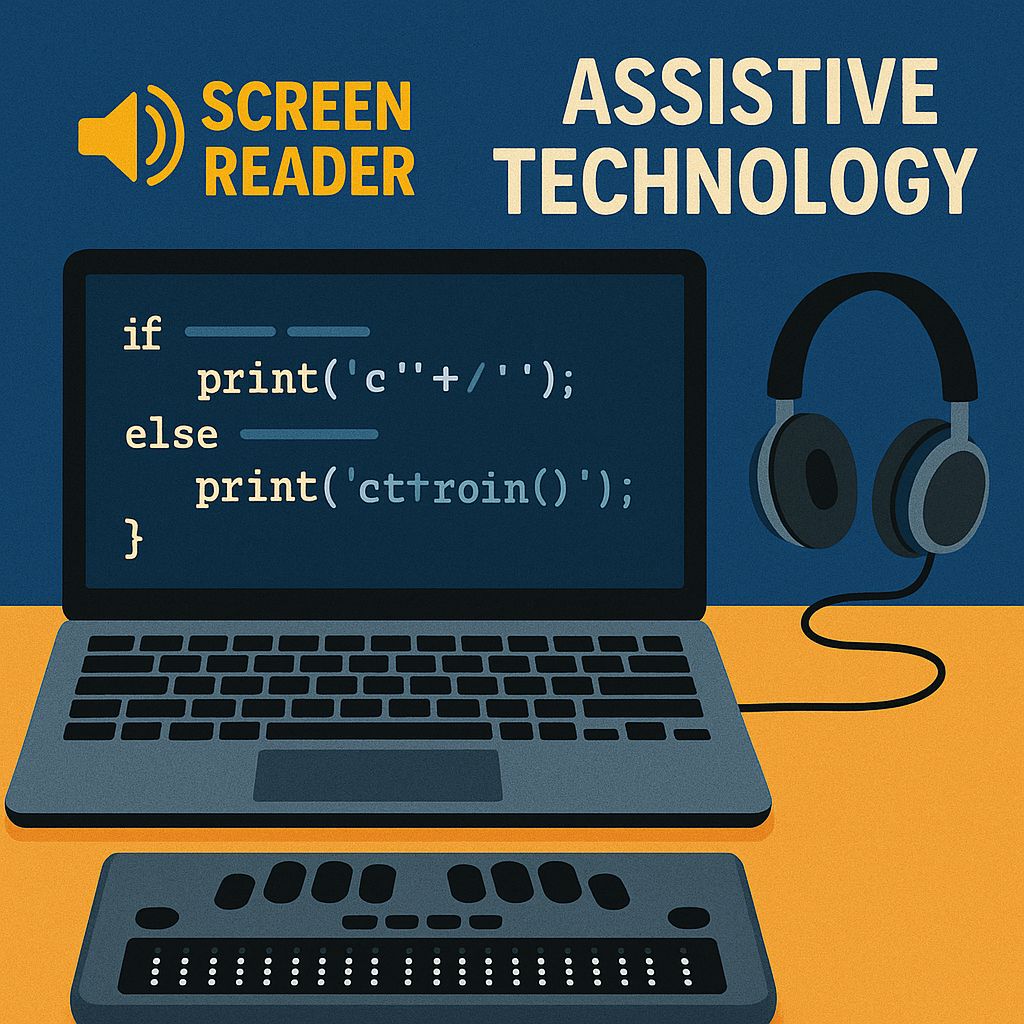
For many years, the field of Computer Science has been seen as a highly visual and technical discipline, often perceived as inaccessible to individuals who are blind or visually impaired. In Ghana, this perception is particularly strong, with many believing that blind students cannot pursue Computer Science at the university level. But is this perception rooted in reality, or is it a myth that needs to be dispelled?
Perceptions: Barriers and Doubts
The prevailing belief in Ghanaian society is that Computer Science is a “no go area” for the blind. This perception is shaped by several factors including:
- Visual Nature of Computing: Many assume that programming, web development, and other computing tasks require sight, especially when dealing with graphical user interfaces, diagrams, and code editors. The misconception is that all aspects of computing are inherently visual, and that blind students would be unable to interpret or create visual content, making it impossible for them to participate fully in coursework or practical assignments.
- Lack of Awareness: There is limited awareness about assistive technologies that enable blind individuals to use computers effectively. Many educators and students are not familiar with screen readers, braille displays, or magnification software, and may not realize that these tools can make programming and computer use accessible. This lack of knowledge leads to the false belief that blindness is an insurmountable barrier to computer science education.
- Institutional Barriers: Some universities may lack the resources, trained staff, or accessible materials needed to support blind students in Computer Science programs. For example, course materials may not be available in accessible formats, and computer labs may not be equipped with the necessary assistive technology. Without institutional support, blind students may find it difficult to keep up with their peers or to demonstrate their abilities.
- Societal Attitudes: Negative stereotypes about the abilities of blind people persist, discouraging both students and educators from considering Computer Science as a viable option. These attitudes can lead to low expectations, lack of encouragement, and even direct discouragement from pursuing STEM fields, further limiting opportunities for blind students.
- Exemption from Elective Mathematics: In Ghana, blind students are often exempted from taking Elective Mathematics at the secondary school level due to the lack of accessible learning materials and teaching methods. Since Elective Mathematics is a core requirement for admission into Computer Science programs at most universities, this exemption effectively denies blind students the opportunity to even apply for these courses. As a result, many assume that Computer Science is simply out of reach for the blind, reinforcing the cycle of exclusion.
Reality: The Possibility and Success Stories
Despite these perceptions, the reality is that blind students can and do succeed in Computer Science, both globally and in Ghana. The key lies in the use of assistive technologies and a supportive learning environment.
- Assistive Technologies: Screen readers such as JAWS (Job Access With Speech), NVDA (Non-Visual Desktop Access), Voiceover (on Mac Computers), magnification software like ZoomText, and combined solutions like Fusion allow blind or visually impaired users to interact with computers, write code, and navigate complex software environments. These tools read out text, code, and even some graphical elements, making it possible to perform most programming tasks.
- Accessible Programming Environments: Many popular programming languages and development environments are accessible with screen readers. For example, Visual Studio Code is a modern, highly accessible code editor that works well with screen readers including JAWS, NVDA and Voiceover. It supports languages such as Python, JavaScript, C#, and HTML, among others. Users can navigate code, access error lists, and use autocomplete features efficiently with keyboard shortcuts. Other accessible editors include Notepad++ and the built-in Windows Notepad for simpler tasks.
- Programming Languages: Text-based programming languages such as Python, Java, C, and JavaScript are accessible with screen readers. These languages do not require visual manipulation and can be written and debugged using accessible editors.
-
Global and Regional Examples: Around the world, there are numerous blind computer scientists, software developers, and IT professionals who have excelled in their fields. Their achievements demonstrate that blindness is not a barrier to success in Computer Science. Notable examples include:
- T.V. Raman: A renowned computer scientist who is blind, T.V. Raman has worked at Google and is known for developing Emacspeak, an audio desktop for visually impaired users.
- Chris Hofstader: A blind software engineer and accessibility advocate, Chris has contributed to screen reader development and accessible technology.
- Chetan Bakhru: Despite being totally blind, Chetan is a successful software developer and accessibility consultant in the United States.
- Saqib Shaikh: A blind software engineer at Microsoft, Saqib leads the Seeing AI project, which uses artificial intelligence to help visually impaired people.
- Victor Ogo Ekwueme: A blind data scientist from Nigeria, Victor has made significant contributions in the field of data science and is an inspiration to many in West Africa.
- Patrick Smith: A programmer, data scientist and founder of the IOTA School, Patrick has excelled in his field despite his visual impairment, demonstrating that local success is possible and attainable.
Bridging the Gap: What Needs to Change?
To turn the possibility into a widespread reality, several steps must be taken:
- Awareness and Advocacy: There is a need for greater awareness among educators, students, and policymakers about the capabilities of blind individuals and the technologies available to support them.
- Resource Provision: Universities should invest in assistive technologies and ensure that course materials are accessible.
- Training: Both students and lecturers need training on how to use assistive technologies effectively in the context of Computer Science.
- Mentorship and Support: Establishing mentorship programs and support networks can help blind students navigate challenges and build confidence.
- Policy Review: There is a need to review and revise admission policies that inadvertently exclude blind students, such as the strict requirement for Elective Mathematics without providing accessible alternatives or support.
Conclusion
The idea that Computer Science is a “no go area” for the blind in Ghanaian universities is a misconception. With the right tools, support, and mindset, blind students can thrive in Computer Science and contribute meaningfully to the field. The achievements of blind programmers and software developers—both globally and within West Africa—are living proof that visual impairment is not a barrier to success in this field. It is time for Ghanaian universities and society at large to challenge outdated perceptions and embrace a more inclusive vision for Computer Science education.